Christian Conversion and Mission
$25.00
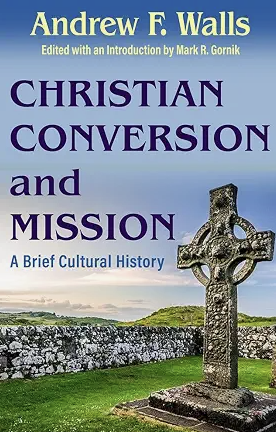
Christian Conversion and Mission: A Brief Cultural History by Andrew F. Walls (edited by Mark R. Gornik) is the final work of the renowned scholar of world Christianity.
Andrew Walls is one of the most significant mission thinkers of the twentieth century and this posthumous book presents his scintillating insights on conversion movements and the meanings of conversion in Christian history. For anyone not familiar with Walls, this is essential reading and a great place to begin engaging his thinking.
Walls never focused his research and writing on Indian or Hindu issues, but he had many students out of India and was a truly global scholar. Yet this book is essential for clear thinking about the gospel in Hindu contexts. “Conversion” and the toxicity of that concept (and reality) among Hindus is after all a central aspect in the teaching of the Rethinking Forum.
Walls writes that:
“People who become Christians do not throw away a worldview called “primal” or “Muslim” or “Buddhist” and take a new one called “Christian;” they amend their maps of reality to include new information and correct what they now see as errors. The new Christian elements will be placed on the old map, and elements that seem characteristically “primal,” or “Muslim,” or “Buddhist” may still be on the operational map—and not necessarily in operational conflict with the Christian elements. Christian conversion involves turning what is already there—primal things, Islamic things, Buddhist things—toward Christ.” (80)
It is easy to add “Hindu” into this statement, and easy also to adjust Walls’ “Christian” terminology (“Christ-centered” or “biblical” are his intended meaning anyway).
17 in stock
Description
 Christian Conversion and Mission: A Brief Cultural History by Andrew F. Walls (edited by Mark R. Gornik) is the final work of the renowned scholar of world Christianity.
Andrew Walls is one of the most significant mission thinkers of the twentieth century and this posthumous book presents his scintillating insights on conversion movements and the meanings of conversion in Christian history. For anyone not familiar with Walls, this is essential reading and a great place to begin engaging his thinking.
Walls never focused his research and writing on Indian or Hindu issues, but he had many students out of India and was a truly global scholar. Yet this book is essential for clear thinking about the gospel in Hindu contexts. “Conversion” and the toxicity of that concept (and reality) among Hindus is after all a central aspect in the teaching of the Rethinking Forum.
Walls writes that:
“People who become Christians do not throw away a worldview called “primal” or “Muslim” or “Buddhist” and take a new one called “Christian;” they amend their maps of reality to include new information and correct what they now see as errors. The new Christian elements will be placed on the old map, and elements that seem characteristically “primal,” or “Muslim,” or “Buddhist” may still be on the operational map—and not necessarily in operational conflict with the Christian elements. Christian conversion involves turning what is already there—primal things, Islamic things, Buddhist things—toward Christ.” (80)
It is easy to add “Hindu” into this statement, and easy also to adjust Walls’ “Christian” terminology (“Christ-centered” or “biblical” are his intended meaning anyway).
Further on in the book (pg. 130) he comments that “worldviews—as with the conversion of believers—are transformed, yet recognizable;” that is, recognizably Hindu within discipleship to Jesus. Walls also highlights that this aspect of transforming thought and society is a process of generations.
There is much more in this book than the few direct applications to Hindu issues mentioned here. This truly is required reading for those who want to understand modern missions.